

In brief
On 25 July 2025, the European Union Intellectual Property Office (EUIPO) declared the invalidity of the trademark “童年时光” (TONG NIAN SHI GUANG EUTM No. 018105147), registered by TNSG Health Co. Ltd., a company linked to the former exclusive distributor of ChildLife products in China. The decision was based on bad faith at the time of filing, following a long-standing commercial relationship between the parties.
This ruling reinforces the EUIPO’s stance against parasitic trademark registrations and highlights the importance of safeguarding brand assets when entering international distribution agreements.
In more detail
Biozeal LLC is a US company founded for the development and distribution of nutritional supplements under the ChildLife brand. Since 2010, Biozeal’s products were distributed in mainland China, Hong Kong, and Macao through a network that initially involved Asambly Chemicals Co., Ltd., and subsequently Nanjing TNSG Biotech Co. Ltd (“Nanjing TNSG”).
Following the termination of the Asambly agreement in 2012, Nanjing TNSG assumed the role of exclusive distributor of ChildLife products in the region. This commercial relationship was formalized through distribution agreements in 2013 and 2018, which expressly or impliedly acknowledged Biozeal’s ownership of the ChildLife intellectual property, including translations and versions of the mark in other languages.
TNSG Health Co. Ltd. (“TNSG Health”), is a company closely linked to Nanjing TNSG through shared ownership and management. In August 2019, while the distribution agreement was still in force, TNSG Health filed an EU trademark application for “童年时光” (TONG NIAN SHI GUANG), a Chinese-language mark that had been consistently used in conjunction with the ChildLife brand and was widely recognized by consumers and authorities as its Chinese version, as can be seen below:
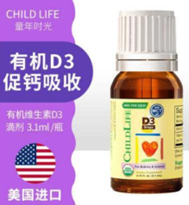

The application was made without Biozeal’s consent and in breach of the contractual prohibition against registering ChildLife-related marks. Consequently, Biozeal filed a cancellation action before the EUIPO in July 2022, relying on, among others, the ground of bad faith under Article 59(1)(b) European Union Trade Mark Regulation (EUTMR), and based on which the EUIPO upheld the cancellation request.
The Cancellation Division conducted a thorough assessment of the factual and legal context, emphasizing that bad faith must be evaluated through an overall analysis of the applicant’s intentions and conduct at the time of filing. Citing the Lindt Goldhase case (C-529/07, EU:C:2009:361), the EUIPO reiterated that bad faith arises when a trademark application reflects a dishonest intention, departing from accepted principles of ethical behavior and honest commercial practices.
In this case, the EUIPO found that the relationship between Biozeal and Nanjing TNSG Biotech, which spanned over a decade, gave rise to a duty of fair play. The parties had entered into distribution agreements in 2013 and 2018, and the distributor agreement in 2018 explicitly prohibited the distributor from registering any version of the ChildLife trademarks, including translations or versions of the mark in other languages. Despite this, the contested mark was filed in 2019 by TNSG Health, a company closely linked to Nanjing TNSG, while the distribution agreement was still in force.
The EUIPO noted that the mark “童年时光” had been used together with the English “CHILDLIFE” mark, and that Nanijng TNSG has educated the Chinese public to understand that both signs have the same origin. The fact that Nanjing TNSG filed both the English and Chinese versions of the ChildLife mark on the same day in China also showed that, to TNSG Health, the English “CHILDLIFE” and the mark “童年時光” are equivalent. The application for the mark “童年时光” in the EU by TNSG Health was also held to be without commercial logic.
Ultimately, the EUIPO concluded that the contested mark had been filed by TNSG Health with the intention to lay hands on the marks of Biozeal, with which its related company (i.e., Nanjing TNSG) had contractual relationships until 2021, and this, in addition to many other relevant factors, supports the finding of bad faith.
The trademark was declared invalid in its entirety, and TNSG Health was ordered to bear the costs of the proceedings.
This decision highlights the importance of clearly defining intellectual property rights in distribution agreements and of monitoring trademark filings by current and former partners. It also confirms that the EUIPO will not tolerate attempts to circumvent trademark ownership through related entities or unauthorized filings, particularly when such conduct undermines the legitimate expectations of long-standing commercial relationships.
* * * * *
Carly Wong, Associate, and Erika Mahler, Law Clerk, have contributed to this legal update.